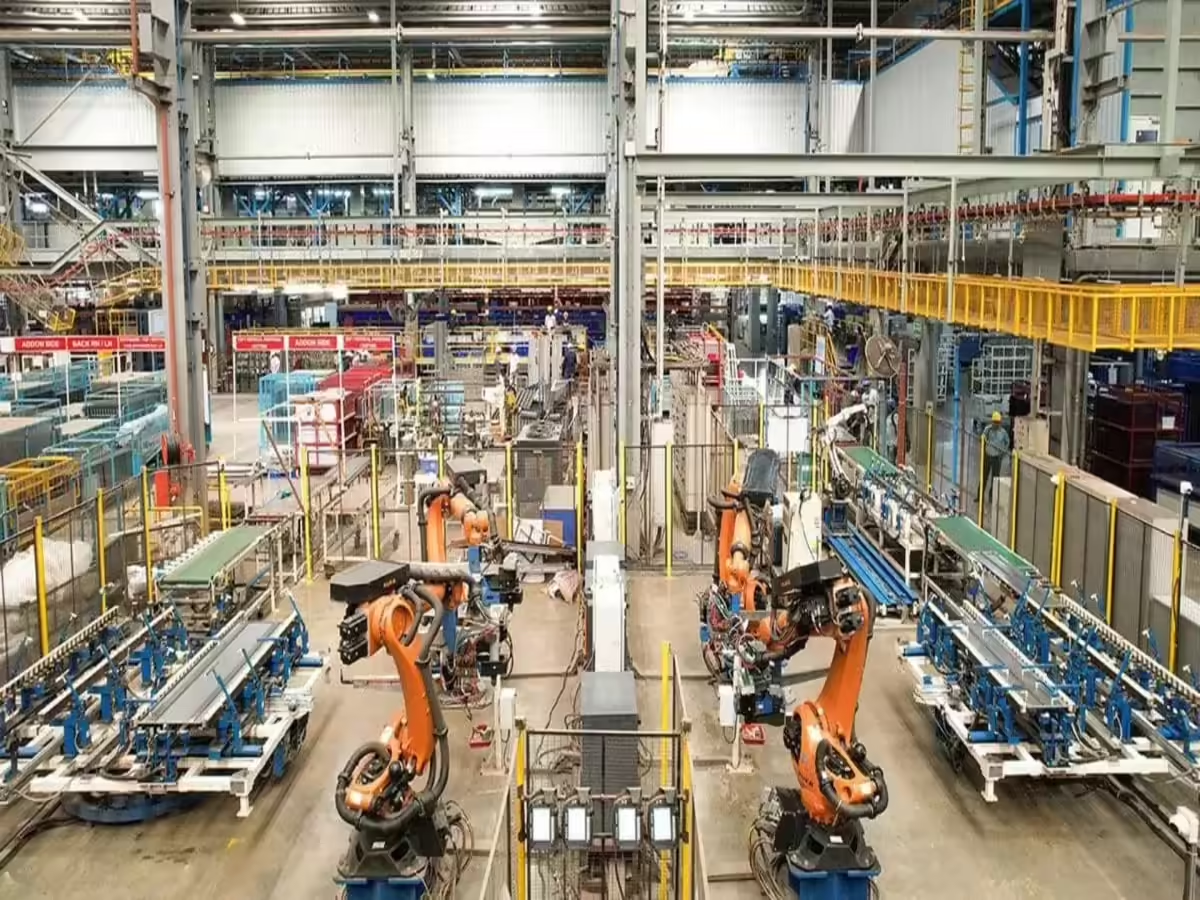
India is preparing to enter the next phase of its manufacturing strategy with the proposed rollout of Production-Linked Incentive (PLI) 2.0 schemes, particularly focused on strengthening its position in global electronics manufacturing.
This move signals a shift from initial capacity-building efforts toward scale, competitiveness and deeper integration into global value chains. For global investors, Economic Development Boards (EDBs) and Investment Promotion Agencies (IPAs), PLI 2.0 represents a significant development in India’s industrial policy landscape.
From Incentives to Scale
The first phase of PLI schemes successfully attracted major investments into sectors such as mobile manufacturing and electronics assembly. India has already emerged as a key production base for global smartphone manufacturers, with increasing export volumes.
PLI 2.0 aims to build on this foundation by addressing the next level of challenges moving beyond assembly to higher-value manufacturing and component ecosystems.
The focus is expected to include:
- Deepening domestic value addition
- Expanding component manufacturing
- Strengthening supply chain resilience
- Enhancing export competitiveness
This reflects a clear policy intent to transition from “Make in India” to “Make for the World.”
Strengthening India’s Role in Global Supply Chains
Global electronics supply chains are undergoing structural shifts, driven by geopolitical factors and the need for diversification. Companies are actively seeking alternative manufacturing destinations that can offer both scale and stability.
India’s PLI 2.0 framework aligns with this shift by creating a more attractive environment for global firms looking to expand their manufacturing footprint.
Key advantages include:
- Large domestic demand supporting production scale
- Policy-backed incentives improving cost competitiveness
- Growing ecosystem of suppliers and ancillary industries
- Increasing export orientation
As a result, India is positioning itself not just as an alternative, but as a strategic manufacturing hub.
Opportunities Across the Electronics Value Chain
PLI 2.0 is expected to unlock opportunities across multiple segments within the electronics sector.
These include:
- Semiconductor components and packaging
- Display technologies
- Battery systems and storage solutions
- Telecom and networking equipment
Importantly, the focus on component manufacturing is critical. Reducing dependence on imports will strengthen domestic supply chains and improve long-term sustainability.
For investors, this creates opportunities not only in final product manufacturing but also in upstream and supporting industries.
Execution Will Be Key
While the policy direction is clear, successful implementation will remain crucial. Investors will continue to evaluate:
- Infrastructure readiness across states
- Availability of skilled workforce
- Ease of regulatory approvals
- Logistics and export efficiency
States that align quickly with PLI 2.0 objectives are likely to attract a significant share of investment.
The IAC Perspective
At the International Advisory Council, we see PLI 2.0 as a natural progression in India’s manufacturing strategy. The shift toward deeper value creation and ecosystem development reflects a more mature and strategic approach to industrial growth.
For global investors, the opportunity lies in engaging early with this next phase particularly in high-value segments of the electronics supply chain.
As global manufacturing continues to rebalance, India’s ability to combine policy support, market scale and ecosystem development will play a defining role in shaping its position in the global electronics industry.
India’s PLI 2.0 Push: What It Means for Global Electronics Manufacturing Investment
India is preparing to enter the next phase of its manufacturing strategy with the proposed rollout of Production-Linked Incentive (PLI) 2.0 schemes, particularly focused on strengthening its position in global electronics manufacturing.
This move signals a shift from initial capacity-building efforts toward scale, competitiveness and deeper integration into global value chains. For global investors, Economic Development Boards (EDBs) and Investment Promotion Agencies (IPAs), PLI 2.0 represents a significant development in India’s industrial policy landscape.
From Incentives to Scale
The first phase of PLI schemes successfully attracted major investments into sectors such as mobile manufacturing and electronics assembly. India has already emerged as a key production base for global smartphone manufacturers, with increasing export volumes.
PLI 2.0 aims to build on this foundation by addressing the next level of challenges moving beyond assembly to higher-value manufacturing and component ecosystems.
The focus is expected to include:
- Deepening domestic value addition
- Expanding component manufacturing
- Strengthening supply chain resilience
- Enhancing export competitiveness
This reflects a clear policy intent to transition from “Make in India” to “Make for the World.”
Strengthening India’s Role in Global Supply Chains
Global electronics supply chains are undergoing structural shifts, driven by geopolitical factors and the need for diversification. Companies are actively seeking alternative manufacturing destinations that can offer both scale and stability.
India’s PLI 2.0 framework aligns with this shift by creating a more attractive environment for global firms looking to expand their manufacturing footprint.
Key advantages include:
- Large domestic demand supporting production scale
- Policy-backed incentives improving cost competitiveness
- Growing ecosystem of suppliers and ancillary industries
- Increasing export orientation
As a result, India is positioning itself not just as an alternative, but as a strategic manufacturing hub.
Opportunities Across the Electronics Value Chain
PLI 2.0 is expected to unlock opportunities across multiple segments within the electronics sector.
These include:
- Semiconductor components and packaging
- Display technologies
- Battery systems and storage solutions
- Telecom and networking equipment
Importantly, the focus on component manufacturing is critical. Reducing dependence on imports will strengthen domestic supply chains and improve long-term sustainability.
For investors, this creates opportunities not only in final product manufacturing but also in upstream and supporting industries.
Execution Will Be Key
While the policy direction is clear, successful implementation will remain crucial. Investors will continue to evaluate:
- Infrastructure readiness across states
- Availability of skilled workforce
- Ease of regulatory approvals
- Logistics and export efficiency
States that align quickly with PLI 2.0 objectives are likely to attract a significant share of investment.
The IAC Perspective
At the International Advisory Council, we see PLI 2.0 as a natural progression in India’s manufacturing strategy. The shift toward deeper value creation and ecosystem development reflects a more mature and strategic approach to industrial growth.
For global investors, the opportunity lies in engaging early with this next phase particularly in high-value segments of the electronics supply chain.
As global manufacturing continues to rebalance, India’s ability to combine policy support, market scale and ecosystem development will play a defining role in shaping its position in the global electronics industry.